
01 The case in brief
“TR-KCF no longer responds”
On 20 February 1978, a Gabonese Armed Forces Puma vanished in flight between Libreville and Franceville. Despite a search of exceptional scale, neither the aircraft nor its occupants were ever found.
- Registration
- TR-KCFc/n 1329 · SA 330C
- Take-off
- 11:13 → 15Camp Aïssa, Libreville
- Last contact
- 12:37logged at Libreville
- On board
- 10 people6 Gabonese soldiers · 4 French
- Survivors
- 0presumed dead
- Search
- ≈ 3½ monthsup to 3,000 men
- Wreckage found
- Noneno trace, no fire
- Status
- Unsolvedofficial line: engine failure
On board were six Gabonese servicemen, including Lieutenant-Colonel-Major Jean-Marie Djoué-Dabany, chief of staff of the land and naval forces and brother-in-law of President Omar Bongo, and four French military advisers. After a final message reporting engine failure, the helicopter vanished without a trace.
The official version concludes it was an accident caused by mechanical failure. But numerous inconsistencies have fuelled, both at the time and in private investigations revived from the 2010s onward, several competing theories: hijacking, political elimination against a backdrop of an attempted coup, or even a landing in São Tomé and Príncipe.
02 The context
Gabon, February 1978
A strategic linchpin for France at the height of the Cold War, and a general staff decimated within weeks.
In February 1978, Gabon was gripped by sharp internal and regional tensions. The country was a strategic foothold for France in an area where several neighbours, Congo, Angola, Equatorial Guinea, had moved towards the Soviet bloc, while the nearby archipelago of São Tomé and Príncipe was leaning towards socialism under Luanda's influence. A year earlier, Bob Denard's “Shrimp operation,” launched from Gabon against neighbouring Benin, had already strained the region.
At home, Omar-Bongo University was on strike in late January; on 2 February, security forces stormed the campus and forcibly conscripted students into the army and police. The dean, Professor Joseph Ambouroue-Avaro, pushed aside, would die in a light-aircraft accident in November 1978.
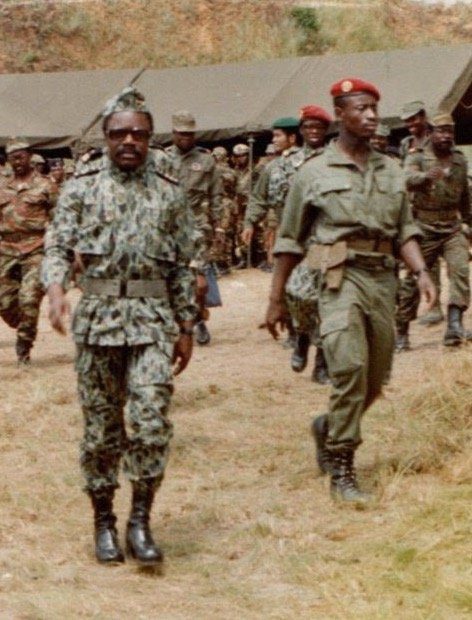
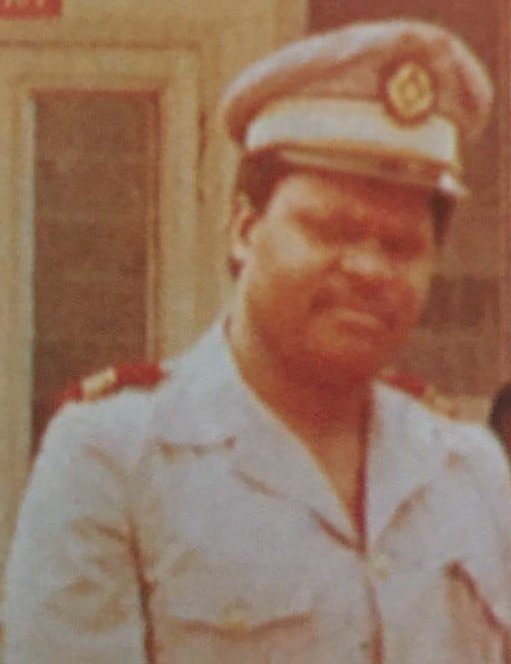
A haemorrhage of senior officers
Too concentrated to be chance
Medical colonel Albert Loembé was poisoned on 7 February. Evacuated to France thanks to his strong friendships in military circles, he died in April at the Bégin military hospital.
Albert Loembé was a brilliant, ambitious intellectual. A few days before he was killed, he had confided to several patients the fate that awaited him.
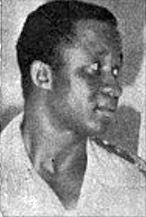
Lieutenant-Colonel Fabien Ntoutoume, deputy chief of staff of the land and naval forces and a friend of Djoué-Dabany, died in Libreville on 12 February, eight days before the crash. The official account speaks of a “benign illness.”
Born on 17 December 1943 in Oyem, he had joined the army in 1965 and was made an officer of the national Order of Merit after the “Estuaire 77” manoeuvres. His throat tight, Djoué-Dabany delivered the eulogy before the body was taken home to Oyem.
Police commander Pépé Odouga, another close associate, is left paraplegic after a road “accident.”
Months earlier, Captain Aïssat, who gave his name to the camp the Puma took off from, had fallen to his death during a jump demonstration, parachute unopened.
Relations between chief of staff Djoué-Dabany and President Bongo had meanwhile deteriorated. Their falling-out is said to date from the assassination of the poet Ndouna Dépénaud, close to the family, in July 1977: Djoué-Dabany reportedly disavowed the crime, while Assélé was appointed head of the police that very day. A report, attributed to this elder half-brother Jean-Boniface Assélé, is then said to have accused the officer of plotting a coup.
03 Timeline of the flight
The TR-KCF's last heading
On 20 February 1978, shortly after 11 a.m., the Puma TR-KCF lifted off from Camp Aïssa with ten men aboard and turned east towards Franceville. Around 12:30, a final message broke through the airwaves: engine failure, imminent crash, 40 nautical miles from Ndjolé. No further call ever came. The aircraft vanished over the forest, and was never found.
11:13 → 11:15
Take-off from Camp Aïssa
The paratroopers were meant to reach Franceville aboard a Nord 262; at the last moment the Puma is stripped of its cargo, except a trunk of currency (≈ 60 million CFA francs), and sent to collect the team. Djoué-Dabany's departure is brought forward after a call “from very high up.” Before boarding, the colonel slips a revolver into his jump boot.
11:15 → 12:30
Inbound over the interior
The Puma pushes east over primary forest, leaving behind the Gabon estuary, Kango, then the Ogooué valley, heading for the Haut-Ogooué.
12:30 · last message
“The Puma is crashing, engine failure”
A message is picked up by a military YS-11 and a civilian aircraft: engine failure and imminent crash, “110 from Ndjolé, 40 nautical miles.” Relayed to the Libreville tower, it is logged at 12:37. No further call is ever made.
Conflicting positions
Where to search, really?
The readings don't agree. Besides “110° / 40 NM from Ndjolé,” another position is cited: 120° from Libreville, 80 nautical miles. A Skyraider pilot, for his part, logs a heading of 300° from Ndjolé, the opposite direction, toward the north-west.
To be filed with caution, as nothing more than a coincidence: on that same 20 February 1978, two French Skyraider pilots based in Gabon take off for Chad. Jacques Borne, known as “Sarcife,” recounts being called that day by the Gabonese presidency to return there with his comrade René, the aircraft to be provided on site. They will fly only two missions and return on 10 March. Nothing ties this to the Puma; it merely conveys the military turmoil of those hours.
In the following weeks
The search drifts away
Around 2 p.m., an Alouette III dispatched to the area has to turn back in the face of a storm. Then, for reasons never explained, the search shifts to the Forest of the Bees, some 200 km from the zone of the last message. Up to 3,000 men are mobilised; France, Morocco, the United States, Côte d'Ivoire and Zaire lend resources. Operations halt as the Renovation festivities approach, on 12 March. No wreckage is ever found.
04 The aircraft
Aérospatiale SA 330C Puma
A twin-turbine transport helicopter, barely three years old, overhauled two days before the flight, and written off in 1978.
TR-KCF (construction number 1329) entered service on 8 December 1975; it had flown to Libreville from Paris in twelve stages. Operated by the air arm of the Gabonese Armed Forces, Gabon received seven SA 330s between 1971 and 1980, it is listed as written off in 1978 by the helis.com aviation database.
According to the gendarmerie report, the aircraft had just undergone a first-level periodic overhaul, from 13 to 18 February 1978: replacement of the rear transmission gearbox, removal and cleaning of the exhaust nozzles, replacement of a fan. On the very morning of 20 February, a thirty-minute test flight revealed no anomaly. The two turbines, changed in November 1976 (338 hours logged) and June 1977 (271 hours), were well below the 1,750-hour maximum.
The report itself rules out a technical failure as the likely cause: it leans towards an external phenomenon: water in the kerosene, or more probably a lightning strike, a storm being reported in the area, and excludes sabotage, since the flight engineer had taken part in both the overhaul and the test flight.
Command and gendarmerie reports (PDF)Overhaul & final servicing
- 11 FebruaryAbnormal rise in engine temperature on the last flight before overhaul.
- 13–18 FebruaryReplacement of the faulty fan and the rear transmission gearbox; inspection of the exhaust nozzles.
- 20 February, morningA technical flight of about 30 minutes, then further work, including replacing a seal on the left turbine.
- 20 February, ~12:30The distress message picked up by two other aircraft, then its relay recorded at 12:37 in Libreville.
Developed by Sud-Aviation, then Aérospatiale, from 1963, the SA 330 Puma first flew on 15 April 1965. A twin-turbine medium transport helicopter, it was built in nearly 700 examples between 1968 and 1987 and widely exported, then produced under licence (notably in Romania, as the IAR 330). The TR-KCF belonged to the first military export version, the SA 330C.
The logbooks of the aircraft commander, Major Pierre Sudre, kept by his family and added to the dossier, document the TR-KCF's activity in its final months: training with the parachute sports team, liaison flights and freight transport for the Gabonese Armed Forces, including ferrying civil servants' pay to the provinces, a routine air-force mission. An earlier entry, dated May 1977, is intriguing: Sudre notes a mission with “Mr Foccart” aboard and seven assault landings at Pointe Denis, at a time when Jacques Foccart was officially no longer in charge of African affairs, since 1974. Pierre Sudre's logbook (PDF)

- Type
- Medium transporttwin-turbine, four-blade rotor
- Type's first flight
- 15 April 1965SA 330 prototype
- Powerplant
- 2 × Turmo IVTurbomeca turboshafts
- Main rotor
- Ø 15 mtricycle landing gear
- Length
- 18.15 mheight 5.14 m
- Max take-off weight
- ≈ 7,400 kg
- Crew
- 2 to 3up to 16 passengers
- Max speed
- ≈ 257 km/hrange ≈ 550 km
- Production
- ≈ 7001968-1987 (excl. licence)
05 Crew & families
The ten who vanished
Six Gabonese servicemen and four French military advisers. List published by L'Union on 7 April 1978 and reproduced in the gendarmerie report.
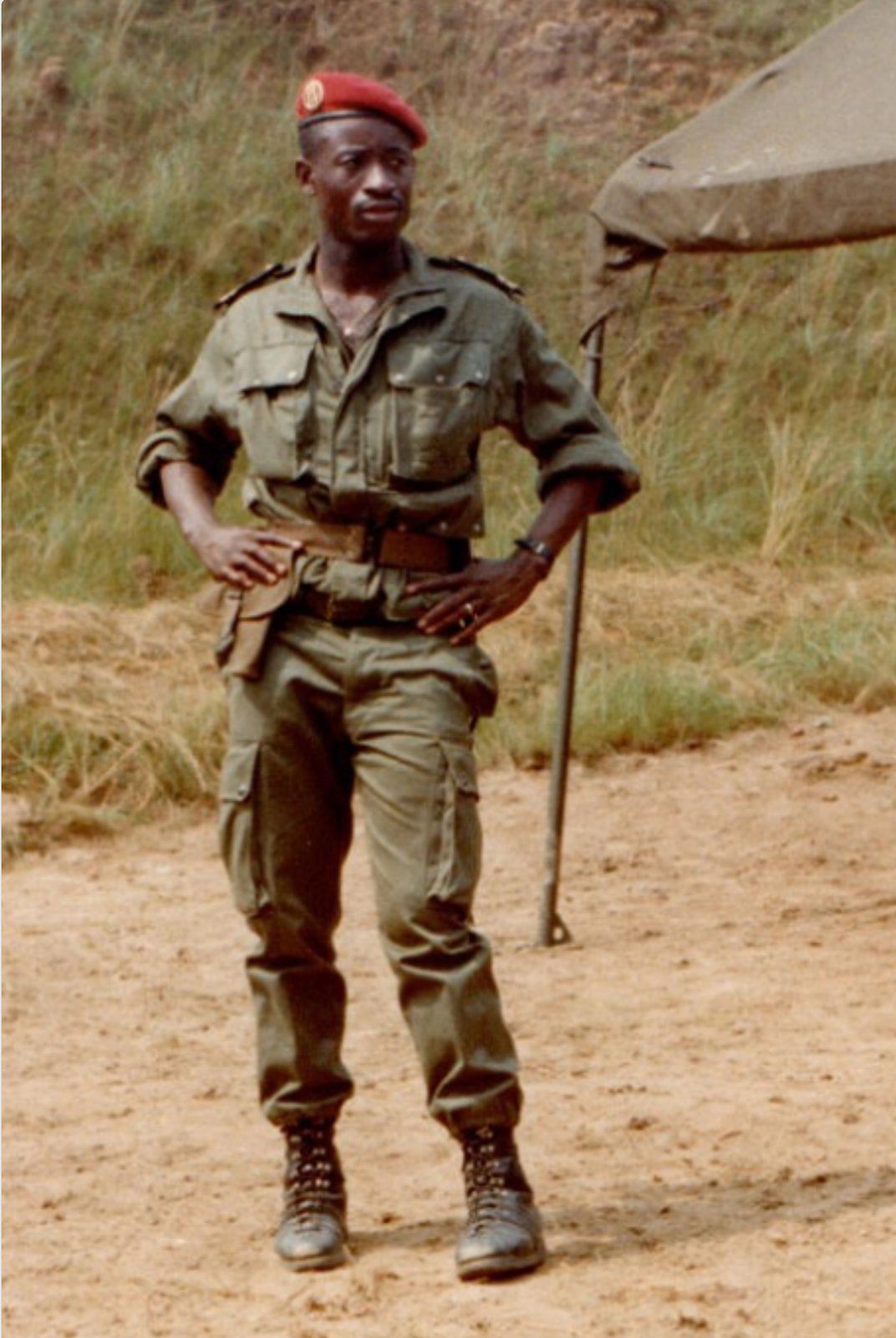

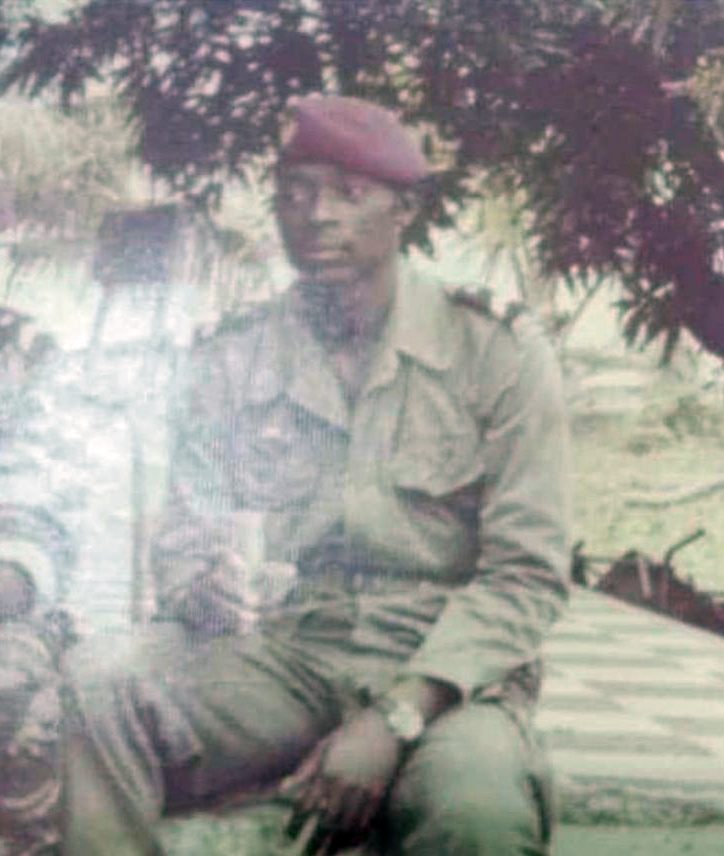
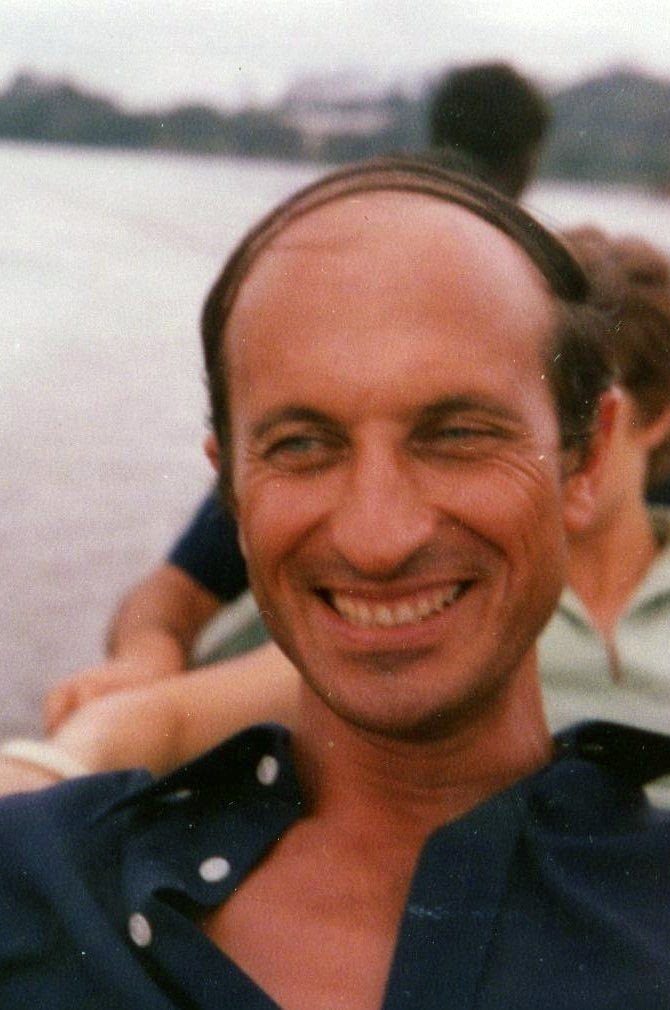
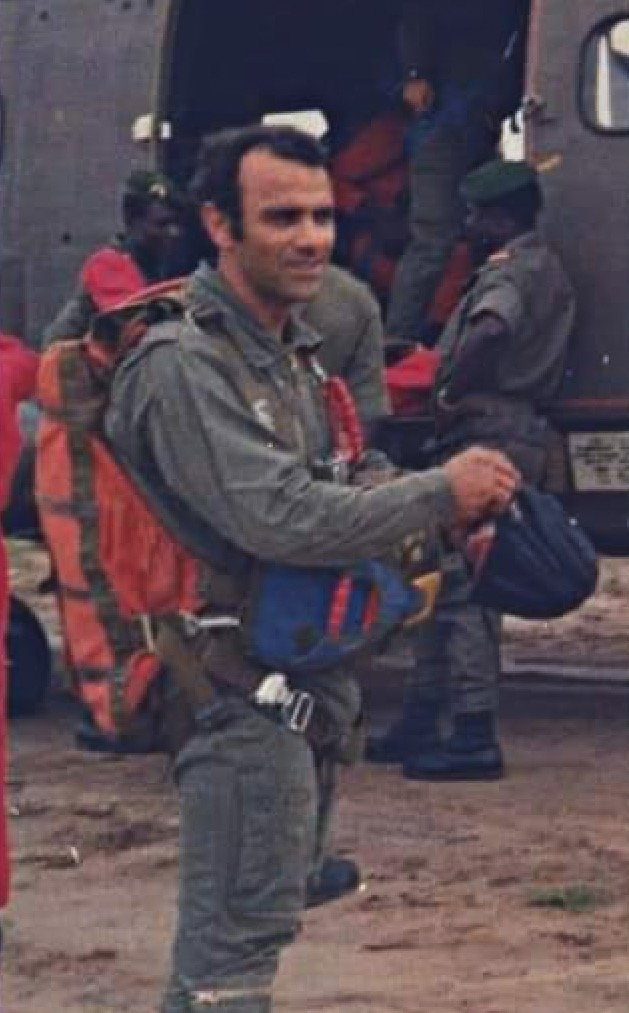
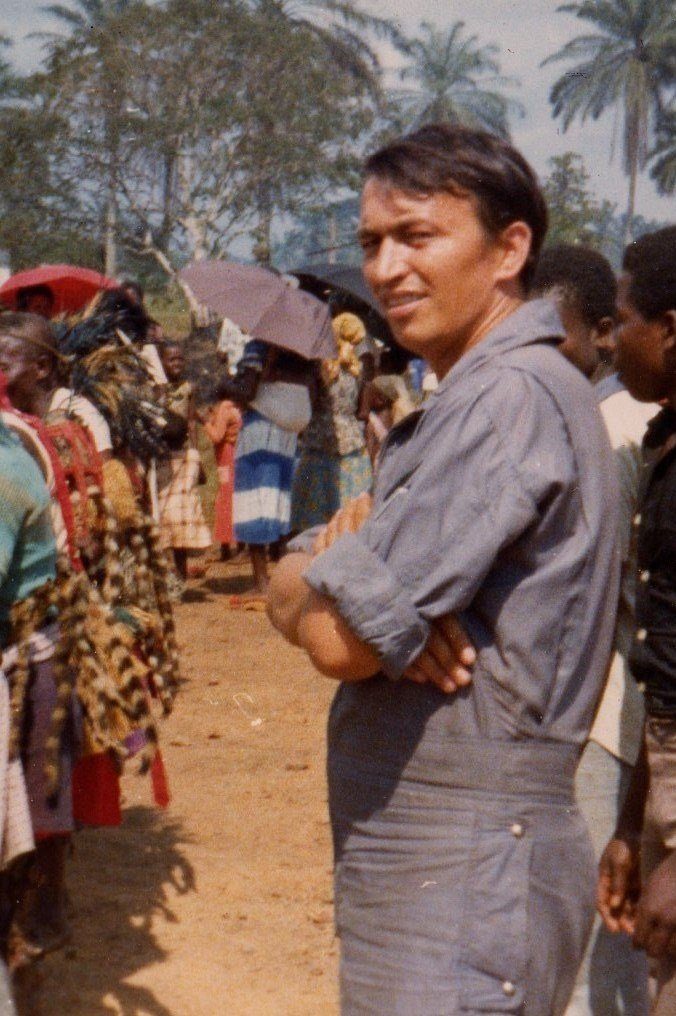
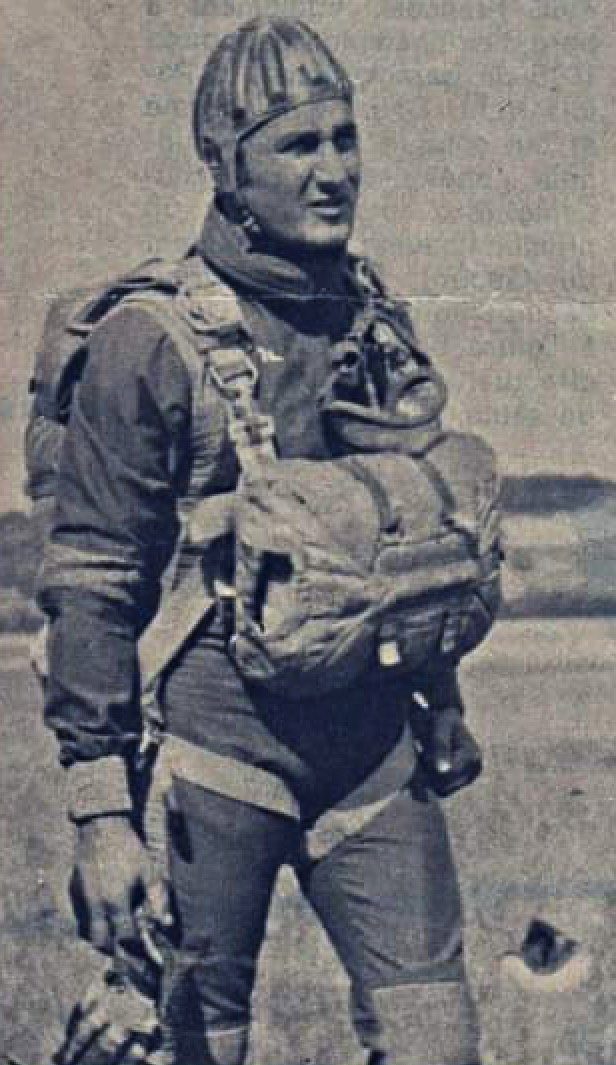
The six Gabonese formed the military parachute sports team. The four Frenchmen were advisers attached to the air section of the military assistance mission (SAMAM 09-691), commanded by Captain Bertrand Cadiot; their families lived in the Tahiti district, at the Cité des Ailes, in Libreville.
BIOMilitary biography of Jean-Marie Djoué-Dabany+
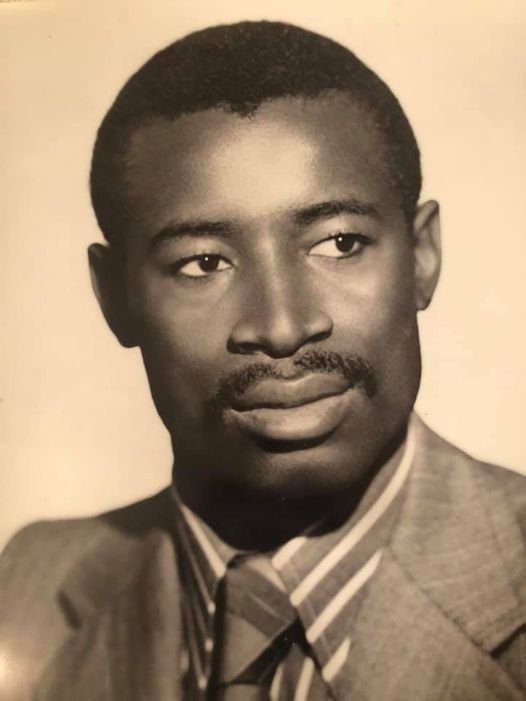
Jean-Marie Djoué-Dabany was born on 30 September 1948 in the village of Obouo, in the north-east of Haut-Ogooué. He joined the army on 5 September 1967, aged 19. After initial training with the South detachment at Mouila (Ngounié), he entered the officer-cadet school at Bouaké, Côte d'Ivoire, and was commissioned second lieutenant on 19 August 1968.
In 1969 he joined the Airborne Troops School (ETAP) at Pau, qualifying in 1970, becoming the first Gabonese soldier qualified in free-fall (automatic-opening) parachuting. Promoted lieutenant on 10 March 1970, he took command of the parachute company on 20 June, and made captain on 9 July 1971.
After advanced courses at Montpellier and the staff college at Compiègne (1972), he became deputy chief of staff of the land and naval forces. A battalion commander in 1974, he was appointed chief of staff of the land and naval forces with the rank of lieutenant-colonel by decree of 31 January 1976; his friend Major Fabien Ntoutoume became his deputy.
In parallel, he built a military parachute sports team with Commander Oyini and Lieutenant Biyogho. It was at the 1975 world championships that they met Henri Deba, a gold medallist: at the end of his contract with the French army, he was recruited to select and train nine Gabonese paratroopers for the Argentina criterium and the 1978 world championships in Yugoslavia. The team trained using the air force's Puma, crewed by French advisers, as its jump platform, hence the week of training set at Franceville from 20 February 1978. Lieutenant Biyogho and Commander Oyini were already there when the rest of the team boarded.
Jean-Marie Djoué-Dabany was promoted colonel posthumously on 1 July 1979, declared “dead on active service” and struck from the army rolls on 24 April 1985.
Available genealogical records indicate that Jean-Marie Djoué-Dabany was the brother of the singer Patience Dabany, Omar Bongo's wife and Ali Bongo's mother. Their father, Jérôme Dabany, was from the Haut-Ogooué.
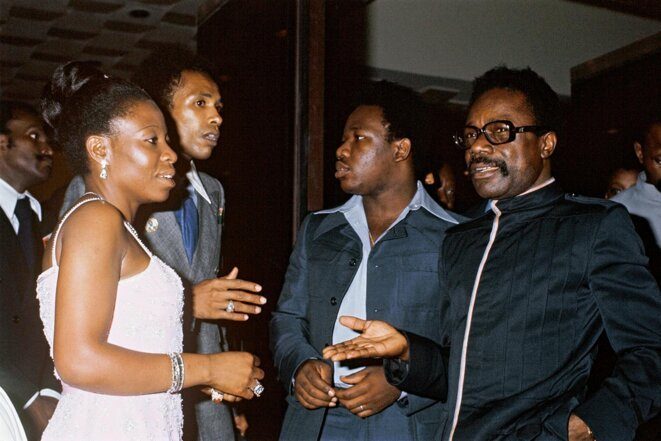
Source: “Military biography of Colonel Djoué-Dabany,” Les ailes plus grandes que le nid (Nze Nze), 7joursinfo.com.
05·b The families' fight
“After 45 years… that's enough!”
Back in France in July 1978, the crew members' wives, in particular Brigitte Sudre and Michèle Français, spent years petitioning: the Presidency, the ministries of Defence and Cooperation, the National Assembly, the Senate, General Bigeard, Amnesty International, the Red Cross, the Holy See. To Amnesty, Omar Bongo reportedly replied that the four Frenchmen had died in the accident. The families say they met with silence, and were placed under surveillance, a wiretapping a Gabonese colonel is said to have warned them about himself.
“To me, Bongo eliminated a whole part of his general staff for fear of an attempted coup. […] Did the colonel try to defect, perhaps to another country, and did it go wrong after a betrayal?” Jérôme Sudre, son of the aircraft commander, 25 June 2023
The relatives' testimonies (2023)
01Jérôme Sudre, son of Pierre Sudre+
Ten years old in 1978, Jérôme Sudre recalls that the French state only came forward three months after the disappearance; it was his mother who told him the news.
A month before vanishing, his father wrote to his brother: “I wonder what I came here to do, if not for the money.” Gabon was to be his last posting. He had requested a transfer to New Caledonia, refused in favour of Gabon.
Pierre Sudre's letter to his brother (PDF)Until her death in 1982, his mother Brigitte worked tirelessly to learn the truth and recover her husband's body. “After 45 years, it is time the French and Gabonese states take responsibility and tell the truth.”
His conviction: “To me, Bongo eliminated part of his general staff for fear of a coup. Initially, Djoué-Dabany was not meant to take the Puma but a Nord 262. Did the colonel try to defect to another country, with the affair going wrong after a betrayal?”
02Michèle Français, wife of Paul Français+
Michèle Français learned of the disappearance the next day, from servicemen living, like her, at the Cité des Ailes. In her account, neither the French nor the Gabonese authorities came forward to the families; only Captain Cadiot, commanding SAMAM, visited them.
The military even offered to bring in mediums, convinced the missing men were alive. One member of each family was able to visit the search area, where 3,000 men were deployed for three and a half months.
With Brigitte Sudre, she petitioned the Presidency, the Ministry of Defence, the Assembly, the Senate, Paris mayor Jacques Chirac, General Bigeard, Amnesty International, the Red Cross and the Holy See. Always the same answer. To Amnesty, Omar Bongo reportedly replied the four Frenchmen had died in the accident.
Her conviction: “I had a kind of premonition. I believe they were alive and held against their will, then killed. Djoué-Dabany alone was the target, but there could be no witnesses.”
03Alain Deba, brother of Henri Deba+
Henri Deba, military world parachuting champion, had been hired as a contractor at the Gabonese parachute battalion to train an international-level team. His brother Alain, himself a French air force helicopter pilot, learned of the disappearance the next day while on a course at Chambéry.
Posted to Libreville in June 1978, he flew over the area: the forest is so dense that nothing seemed to indicate a Puma had crashed there. The general commanding the presidential guard assured him he had no information. A French captain who had led the ground search for fifteen days, helped by a Pygmy tribe, shared his conclusion: the wreck was surely not in the announced zone.
His elder brother Gérard, who had Amat as a student, later obtained the review of a file marked Defence Secret: opened, then closed “with nothing to say.” The family also contacted journalist Pierre Péan, but the inquiry led nowhere.
His theory: Bongo wanted to be rid of a dangerous rival, Djoué-Dabany, the others being collateral damage; the Élysée's African cell may have been told a coup was being prepared.
04A search participant (former paratrooper)+
A former French paratrooper, who had known Warrant Officer Deba at the airborne troops school, happened to be in Gabon with a rotating company of the 3rd RPIMa (Camp Général-de-Gaulle, Libreville) a few days after the disappearance. He spent more than a month searching with Gabonese forces, helicopter-winched into the bush, notably the “Forest of the Bees,” where they advanced by machete at about 200 metres an hour in 32 °C and over 90% humidity, following the Puma's initial flight plan in the Ndjolé region.
The outcome: “no trace of the aircraft or its occupants”; the search was abandoned after two months, radar planes still overflying the forest. He says he later learned the crew had reportedly left its initial flight plan to pick up an extra passenger at the presidential palace.
He relays several suppositions then circulating: a large sum carried aboard (around 60 million CFA francs); a version in which the crew made off with the loot; another in which the Puma landed at São Tomé on 20 February 1978; and yet another in which the aircraft was spotted in a hangar in France. He also notes that Deba's wife was wiretapped and watched for years.
His conclusion echoes the families': “accident, hijacking, voluntary disappearance, score-settling? It will remain a mystery.”
Read on the original forum (FR)06 Stakes
Françafrique, São Tomé & networks
The disappearance unfolds within a regional game where mercenaries, French intelligence and a diplomatic crisis intersect.
Crisis with São Tomé and Príncipe
A plot offshore
On 19 February 1978, agreements are signed between São Tomé and Angola; the same day, a US helicopter carrier leaves Libreville. On the evening of the 20th, President Pinto da Costa complains to the UN of a violation of his airspace by a helicopter from Gabon, carrying, he says, mercenaries.
In early March, around a thousand Angolan soldiers, Cuban and East German advisers and Soviet radar are deployed on the archipelago. L'Union runs a series of articles fiercely hostile to Da Costa, before a lull as abrupt as the crisis.
The shockwave reached beyond the archipelago: at an OAU summit, Beninese President Mathieu Kérékou likewise alluded to Gabonese “internal problems”, including the Puma's disappearance, before Bongo retaliated by expelling many Beninese nationals.
French networks
Foccart's shadows
Pierre Sudre's logbooks carry notes of liaison flights mentioning Jacques Foccart, officially retired from African affairs since 1974, as well as “assault landings” and medical evacuations. Pierre Sudre's logbook (PDF)
Around Bongo orbited former SDECE and Foccart-network figures: ex-intelligence officer Maurice Robert, appointed ambassador; former ambassador Maurice Delaunay; and the mercenary Bob Denard, involved in several destabilisation operations launched from Gabon.
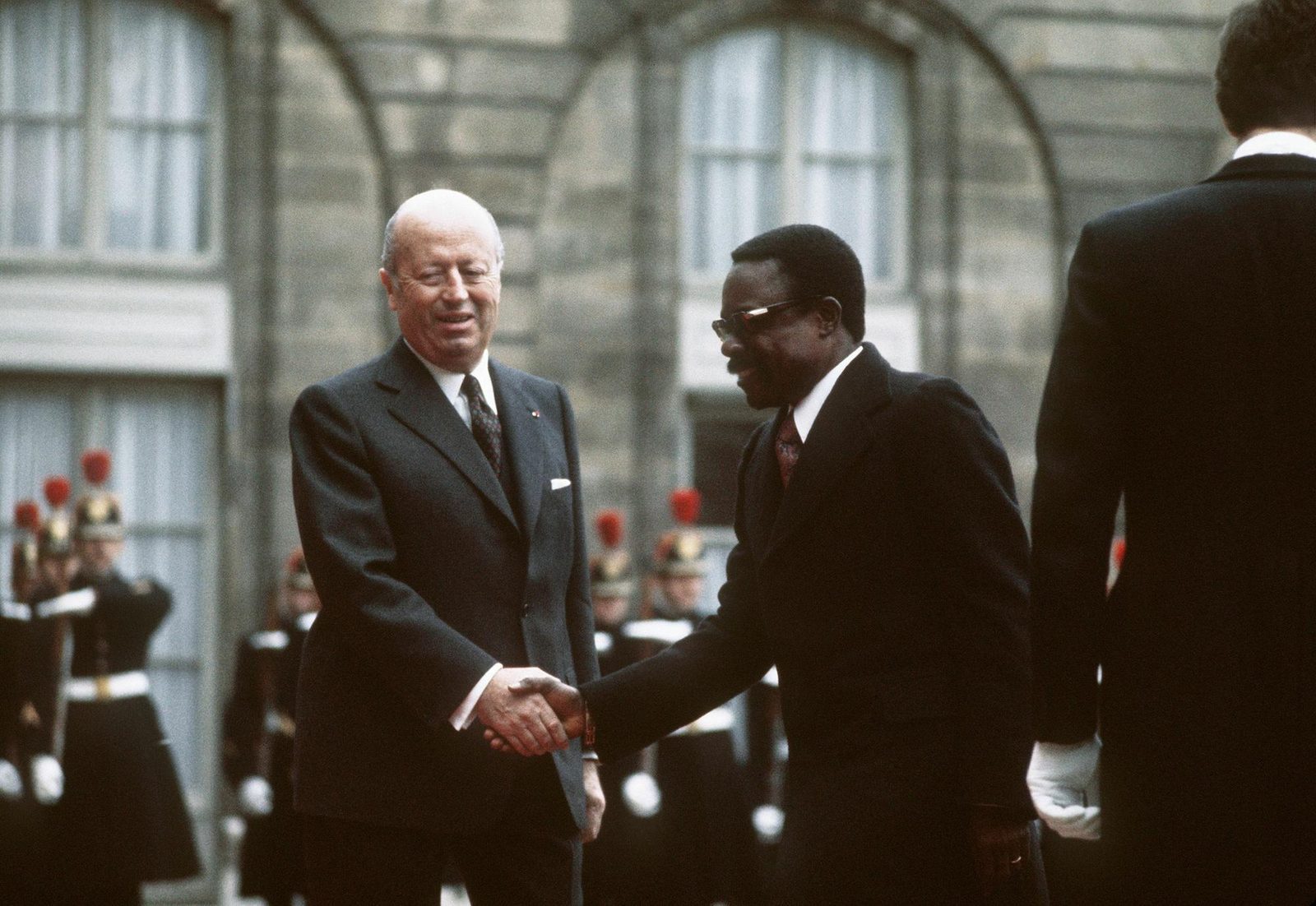
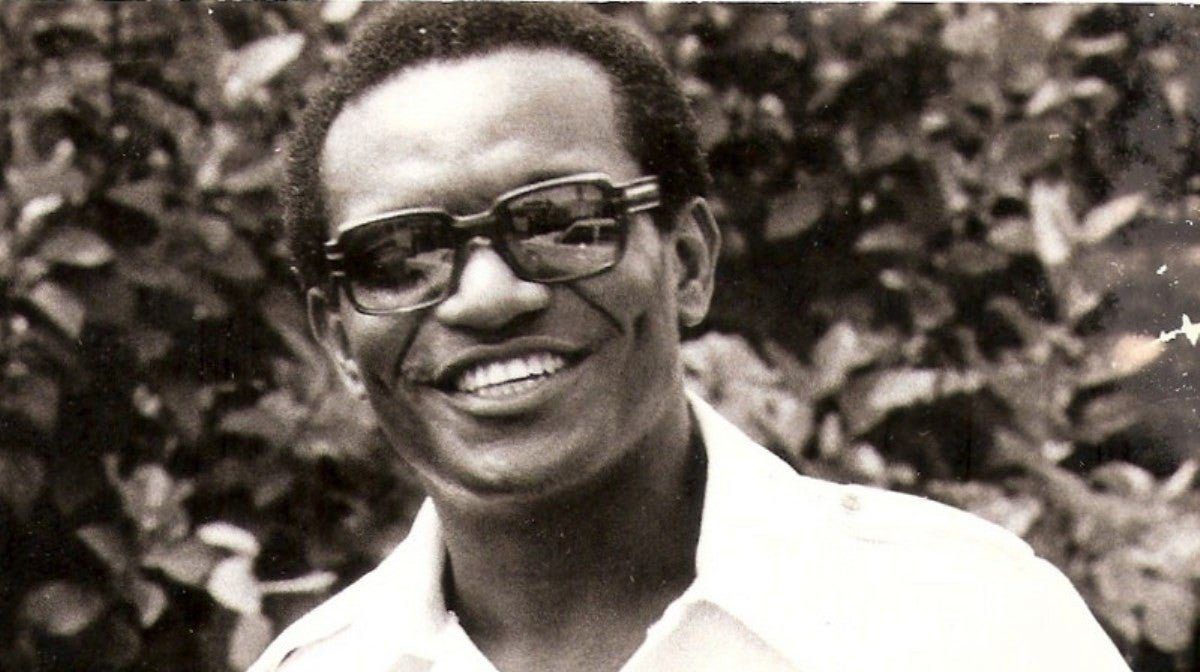
In November 1979, São Toméan Prime Minister Miguel Trovoada, a close friend of Djoué-Dabany, with whom he stayed during his visits to Gabon, is arrested, accused of the 1978 “plot,” then exiled to France in 1981.
07 Accounts, versions & hypotheses
What people say
This section reports hypotheses drawn from testimony and unverified work. They are presented as such and do not constitute established facts; allegations against named persons are attributed to their authors.
H1Hijacking & political elimination+
According to accounts gathered by the private investigation circulated from 2013, the aircraft was hijacked as part of a thwarted coup attempt, Djoué-Dabany having been captured and held in secret. The French families hold to the conviction of an elimination “that was to leave no witnesses.”
A text published for the fortieth anniversary (2018) goes further: it claims the colonel “was indeed plotting a coup,” that a brawl broke out aboard at Camp Aïssat, leaving several dead, and that Djoué-Dabany, captured, was not executed until 1990. These claims rest on no material evidence.
H2São Tomé & the presidential Grumman+
A doctoral thesis defended in 1981 at Paris 1 by Moïse N'Solé Biteghe, supervised by historian Guy Pedroncini, raises the possibility that the wreck was reported at São Tomé, and that an unofficial version speaks of a hijacking of the aircraft carrying the funds. Thesis excerpt (PDF)
It also links the affair to the February 1980 crash at Ngaoundéré (Cameroon) of the Gabonese presidential Grumman G-II TR-KHB, in which René Journiac, adviser on African affairs to Valéry Giscard d'Estaing, perished.
H3The aircraft present in France+
In 1981, a rumour relayed by a former adviser places the helicopter intact in a SNIAS (now Airbus Helicopters) hangar at Marignane. The information has never been confirmed.
H4Crew members reappearing+
Various rumours circulated, none ever established: Paul Français allegedly seen at the 1978 World Cup in Argentina; Pierre Sudre reportedly crossed paths with a witness in Brazil in 1985 (the witness, a pilot, died soon after in a helicopter accident); Pierre Amat said to have been seen in Nice. No material evidence has ever supported these accounts.
H5The parallel deaths+
The disappearance belongs to a run of deaths deemed too concentrated to be chance: medical colonel Loembé (poisoned, February 1978), Lt-Col Ntoutoume (poisoned, 12 February 1978), commander Odouga (accident, paraplegia), Captain Aïssat (fatal jump). Later, Colonel Layigui and René Journiac would die in the presidential Grumman crash (1980), and General Ossialy in Cotonou in 1993.
Several inconsistencies underpin these doubts: major searches organised far from the zone of the last message; the claim, reported by several sources, that the helicopter was found intact and empty of its occupants; and the prolonged absence of any public mention of Djoué-Dabany's name in the Gabonese press.
08 Consequences & legacy
A case that will not die
Lieutenant-Colonel-Major Djoué-Dabany was promoted colonel posthumously on 1 July 1979, declared “dead on active service” and struck from the army rolls on 24 April 1985. In 2011, a French MP was met with defence secrecy after requesting the declassification of files. In March 2013, President Ali Bongo Ondimba inaugurated a barracks in Franceville named after Djoué-Dabany, who was the brother of singer Patience Dabany and the uncle of Ali Bongo.
The fate of this generation's officers was mixed: while several met violent deaths (Loembé and Ntoutoume in 1978, Colonel Layigui in 1980, General Ossialy in 1993 in Cotonou), others went on to long careers: Ba Oumar, chief of staff then minister; Oyabi, head of military intelligence; Ngari, Djoué-Dabany's successor at the general staff, who became a minister and MP; or General Oyini, his former deputy in the parachute battalion.
The affair has resurfaced regularly in the Gabonese opposition press: Le Bûcheron (March 1992), Paul Mba Abessole's Le Message du Duo (“Djoué Dabany is not dead… in the Forest of the Bees,” February 1995), then Bruno Ben Moubamba's pamphlet (2010, reissued 2013). The private investigations revived from 2013 and the 2023 testimonies are part of this movement.
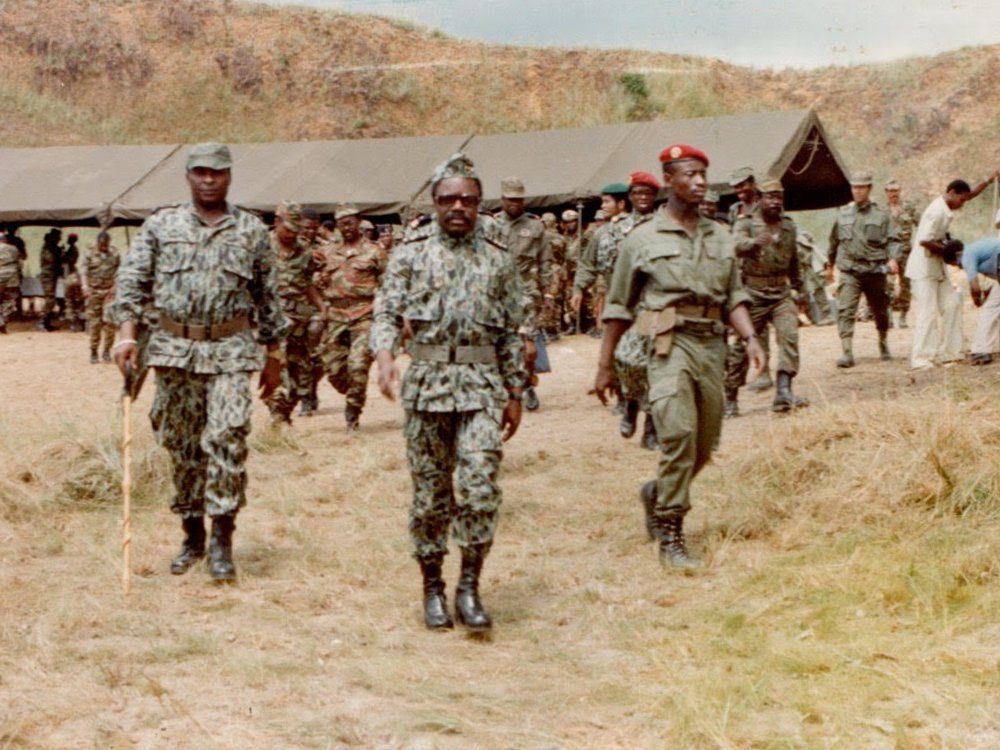
09 Media
Photographs & video
Click an image to enlarge it, or a video thumbnail to play it.
10 Archives & sources
References & external links
Period documents, aviation databases, investigations and testimonies consulted for this dossier.
Press clippings & archive documents
Dec.A “Puma” for the Gabonese Armed Forces+
L'Union · December
France's handover, on 12 December, of an SA 330 Puma helicopter to the Gabonese Armed Forces, with General Boulingui in attendance. A 3,000-hp aircraft, 280 km/h, 2 hr 30 range, intended for commando and paratrooper transport, medical evacuations and rescue at sea and over the forest.
Open the clipping1977After “Estuaire 77”: the Franco-Gabonese parade+
L'Union · 5 December 1977
The large military parade closing the “Estuaire 77” manoeuvres, opened by Lieutenant-Colonel-Major Djoué-Dabany, chief of staff of the FAG. On parade: the Gabonese infantry, the presidential guard, the 6th BIMa and the paratroopers of the 8th RIPMa from Castres; overhead, Jaguars and Fouga Magisters.
Open the clipping1977Franco-Gabonese manoeuvres “Estuaire 77”+
L'Union · 8 December 1977 (report by François Milébi)
The major report on the “Estuaire 77” manoeuvres: the Franco-Gabonese defence agreements, the exercises around Libreville, the drop of the 8th RIPMa paratroopers and the 1st Gabonese company, the Jaguars and the escort ships. It was during these manoeuvres that the Puma TR-KCF was photographed.
Open the clipping1978Death of Colonel Ntoutoume, deputy chief of staff of the FTN+
L'Union · February 1978
Fabien Ntoutoume's obituary: born on 17 December 1943 in Oyem, he joined the army in 1965 after a philosophy baccalauréat, trained at the Aix-en-Provence military college, commanded the 5th company at Makokou, became battalion commander in 1975 then deputy chief of staff in 1976, and was decorated after “Estuaire 77.” He died in Libreville of a “benign illness.”
Open the clipping1978The funeral of Colonel Fabien Ntoutoume+
L'Union · February 1978
The account of the funeral, from Libreville to Oyem, his hometown. Posthumous appointment as officer of the Order of the Equatorial Star; eulogy delivered by Djoué-Dabany, bidding farewell “to his deputy and comrade.”
Open the clipping1978Medical Colonel Albert Loembé to be buried today+
L'Union · April 1978
Loembé's burial at the Plaine Niger cemetery in Libreville. Born on 11 September 1944 in Libreville, a military doctor, hospitalised at Percy from 8 February 1978 then transferred to Bégin on 14 April, where he died. Appointed colonel and officer of the Equatorial Star posthumously.
Open the clipping1978“The Puma SA-330”: the news embargo is lifted+
L'Union · 7 April 1978
The short notice by which the authorities lift, after six weeks of silence, the embargo on information: they confirm the disappearance of the Puma SA-330 on 20 February 1978 in the forest south-east of Ndjolé, and announce the publication, on page 5, of the joint search command's report.
Open the clipping1978An update on the “Puma” search operations+
L'Union · 7 April 1978 · by the joint search command
The detailed official report: the list of the ten people aboard (three French crew, warrant officers Amat and Sudre, and seven passengers including Lieutenant-Colonel Djoué-Dabany), the time given here by the command, “12:27,” the search from Ndjolé to Lastoursville, the forward base at la Boa deep in the forest, around a thousand men committed, the Nord-262s and the Alouettes, and progress of 400 metres an hour cut by machete.
Open the clipping1978Why Franceville? Why the “Puma”?+
L'Union · 7 April 1978 (A.K.)
The article that sheds light on the trip: the passengers, the elite of Gabonese military parachuting, were heading to Franceville for a three-day camp preparing for the international (CISM) competitions in Argentina and Yugoslavia. Commandant Oyini and Lieutenant Biyogho were already waiting on site; the Puma had been chosen for its qualities as a jump helicopter.
Open the clipping1978São Tomé and Príncipe: autopsy of a plot (I)+
L'Union · April 1978
The first part of L'Union's investigation into the São Toméan affair: the audience granted by Omar Bongo to Maria Amorim, ambassador of São Tomé and Príncipe, and Libreville's stated wish to keep its relations with the archipelago intact, against a backdrop of coup rumours.
Open the clipping1978L'Union dossier: the Puma search & the São Tomé crisis+
L'Union · March–April 1978
A collection of L'Union pages (16 March – 14 April 1978): the “About the Puma SA-330” communiqué, “An update on the Puma search operations” by the joint staff (with the list of the ten missing men), and the series “São Tomé and Príncipe: anatomy of a plot.”
Open the PDF1995“Djoué Dabany is not dead… in the Forest of the Bees”+
Le Message du Duo · no. 91, 11 February 1995
Paul Mba Abessole's investigation in the opposition newspaper: the thesis of the colonel's abduction and elimination against a backdrop of his falling-out with Bongo, a detailed account of 20 February 1978 and the rumours surrounding the disappearance.
Open the PDF2026The last flight of Jean-Marie Djoué-Dabany+
La Lettre de Michel Ongoundou Loundah · no. 17, 21 October 2026
A long memorial op-ed revisiting, forty-eight years on, the disappearance of the TR-KCF: portraits of the ten men aboard, the context of February 1978, Djoué-Dabany's rise and his closeness to Omar Bongo, and the coup rumours, carefully separating what is established from what is not.
Open the PDFEncyclopaedia & aviation databases
Investigations & testimonies
Press, forums & video
Reference documents (dossier holdings)
- L'Union (Libreville): “A helicopter forced to land south of Booé” (no. 648, 22 Feb 1978); “The search continues south of Ayem” (no. 650, 24 Feb); “An update on the Puma search operations” and “The list of the missing” (no. 683, 7 Apr 1978).
- Statement by Omar Bongo, L'Union no. 660, 8 March 1978.
- “São Tomé and Príncipe” series, L'Union, 7 to 14 April 1978.
- “No news of a helicopter missing in Gabon,” Le Monde, February 1978.
- “Djoué Dabany is not dead… in the Forest of the Bees,” Le Message du Duo no. 91, 11 Feb 1995; Le Bûcheron no. 58, March 1992.
- Moïse N'Solé Biteghe, Franco-Gabonese relations since 1960, doctoral thesis (supervised by G. Pedroncini), Paris 1 Panthéon-Sorbonne, 1981 · PDF.
- Gabonese gendarmerie report (WO François Enizan), 3 May 1978; SAMAM command report (Capt. Bertrand Cadiot), 7 March 1978 · PDF; Major Pierre Sudre's logbooks · PDF.
- Family testimonies (Jérôme Sudre, Michèle Français, Alain Deba, 2023) and advisers' accounts; private documents.